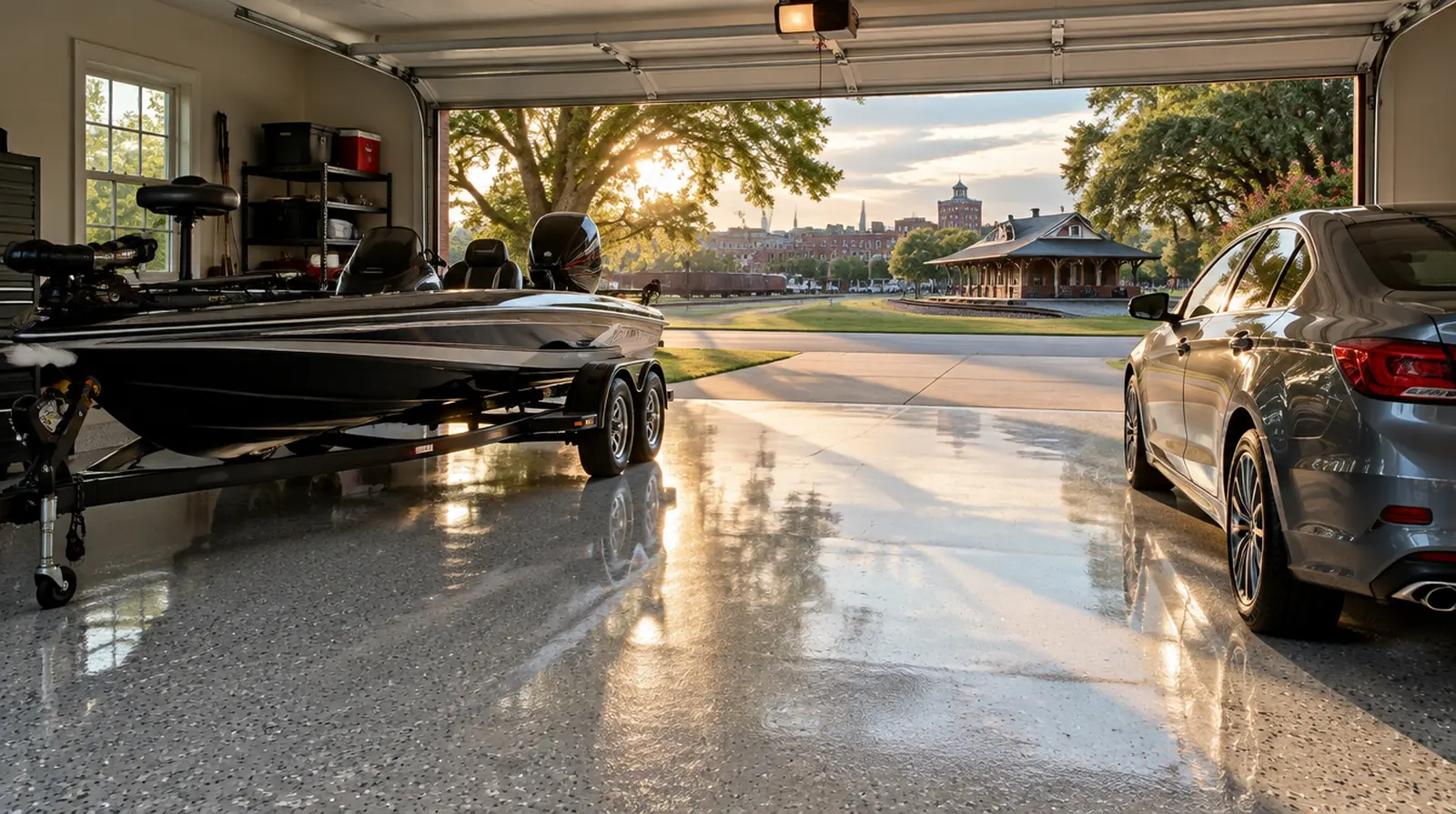
What polyaspartic means
Polyaspartic is a type of aliphatic polyurea. In plain terms, it is a coating chemistry that cures much faster than standard epoxy, does not turn yellow in sunlight, and stays a bit more flexible as temperatures change. It was first used to protect bridges and industrial steel, then moved into floors because it lets installers finish a garage in a single day instead of two or three.
Most of our polyaspartic systems pair it with epoxy or a polyaspartic base: we grind and repair the slab, apply a primer and base, broadcast chips or leave a solid color, and finish with one or two polyaspartic topcoats. The clear top layer is what gives the floor its gloss, stain resistance and UV stability.
Why sunlight matters
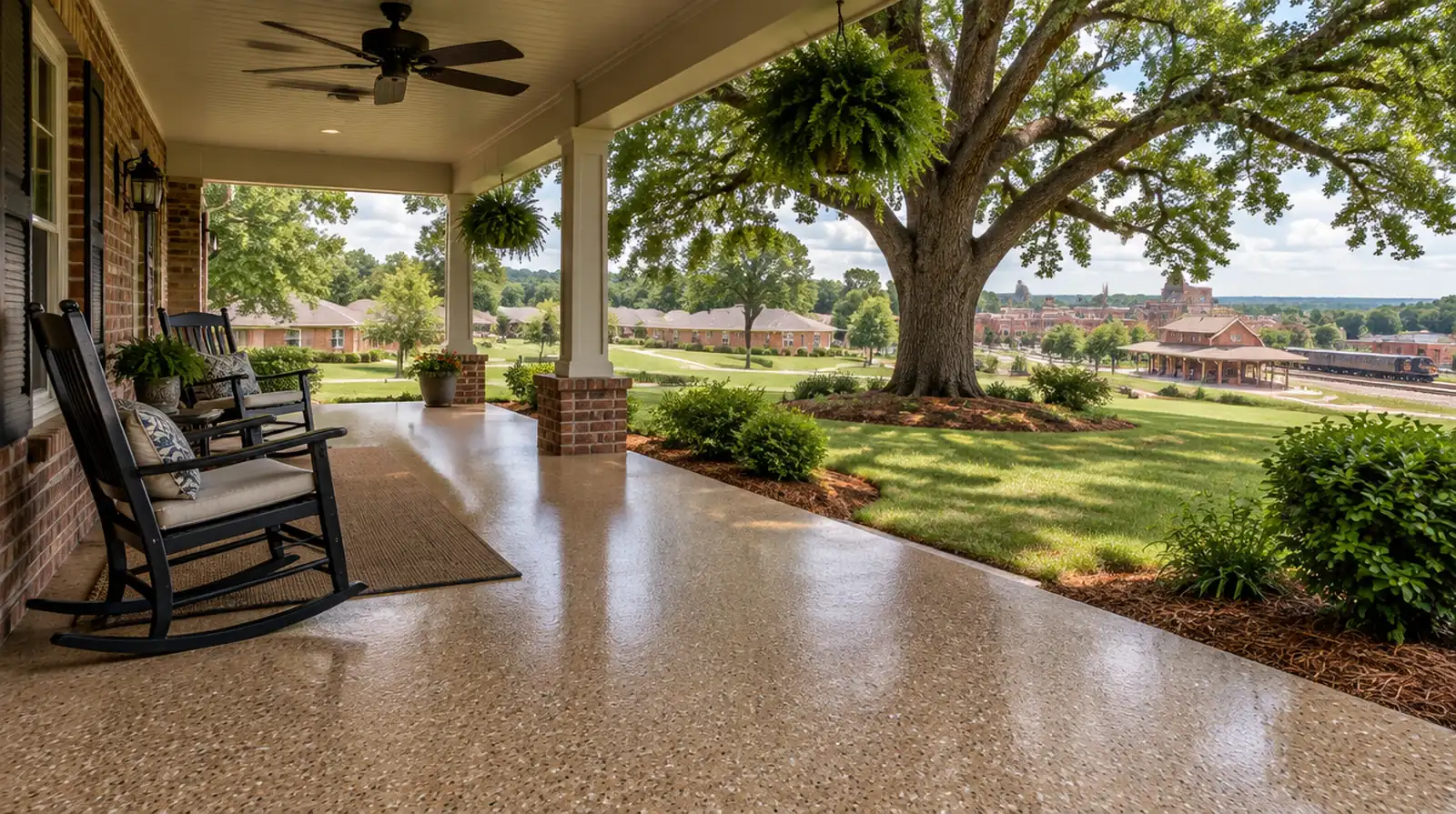
Many garages here face the street, and when the door is up on a summer afternoon the sun beats right across the floor. Standard epoxy topcoats can amber, or yellow, with that exposure, especially on white and gray blends. Polyaspartic topcoats do not have that problem, so the floor looks the same in year five as it did on day one. That is also why we use polyaspartic on porches, sunrooms and screened patios that get bright light every day.
Fast turnaround
Because polyaspartic cures so quickly, a typical garage can be ground, repaired, coated and topcoated in one long day. You can usually walk on it that evening and drive on it within a day or so, depending on temperature. For a busy family, that means one night of parking in the driveway instead of most of a week. For a business, it means a weekend project instead of a long shutdown.
Handling heat and humidity
The fast cure is a strength, but it also means the installer has to work quickly and know the product. In July heat, polyaspartic can set up in the bucket in just a few minutes if it is not handled correctly. We adjust batch sizes, choose formulations meant for hot weather, start early in the day, and keep a tight crew so every pass is smooth. When humidity is very high, we watch dew point and slab temperature closely so moisture does not interfere with the cure.
Cooler months are actually a good time for polyaspartic, since it keeps curing at temperatures that would stall many epoxies. That lets us schedule garage work through most of the winter.
Polyaspartic or traditional epoxy?
- Speed: Polyaspartic wins, often a one-day install.
- UV stability: Polyaspartic stays clear; epoxy topcoats can yellow.
- Build thickness: Epoxy base coats are thicker and good for leveling rough slabs.
- Hot tires: Both work well when installed correctly over a ground surface.
- Cost: Polyaspartic material costs more, but the shorter install offsets some of that.
In many cases the best floor uses both: an epoxy base for bond and build, and a polyaspartic top for durability and UV resistance. We will recommend a combination that fits your slab and how you use it.
Places we install it
Garages, porches, patios under cover, sunrooms, pool equipment rooms, retail entries, restaurant prep areas, auto service bays and showroom floors. Anywhere you need a tough clear finish that goes down quickly and resists fading is a good fit.
Care and upkeep
Sweep away grit, mop with a mild cleaner and clean up spills when they happen. Polyaspartic topcoats resist most household chemicals, oil and road salt, but strong solvents left sitting for a long time can still mark them. Use pads under jack stands and kickstands. If the finish dulls in a high-traffic path after many years, a light scuff and a fresh topcoat can bring it back. Read more about our flake floors or garage coatings to see how polyaspartic fits into each.
Warranty and expectations
We explain exactly what the warranty covers before work begins, including peeling and delamination from the slab, and what it does not, like damage from dropped tools or dragged equipment. Clear expectations up front make for happy customers.
to price a one-day floor.
Call (731) 240-6858 for a free estimate.