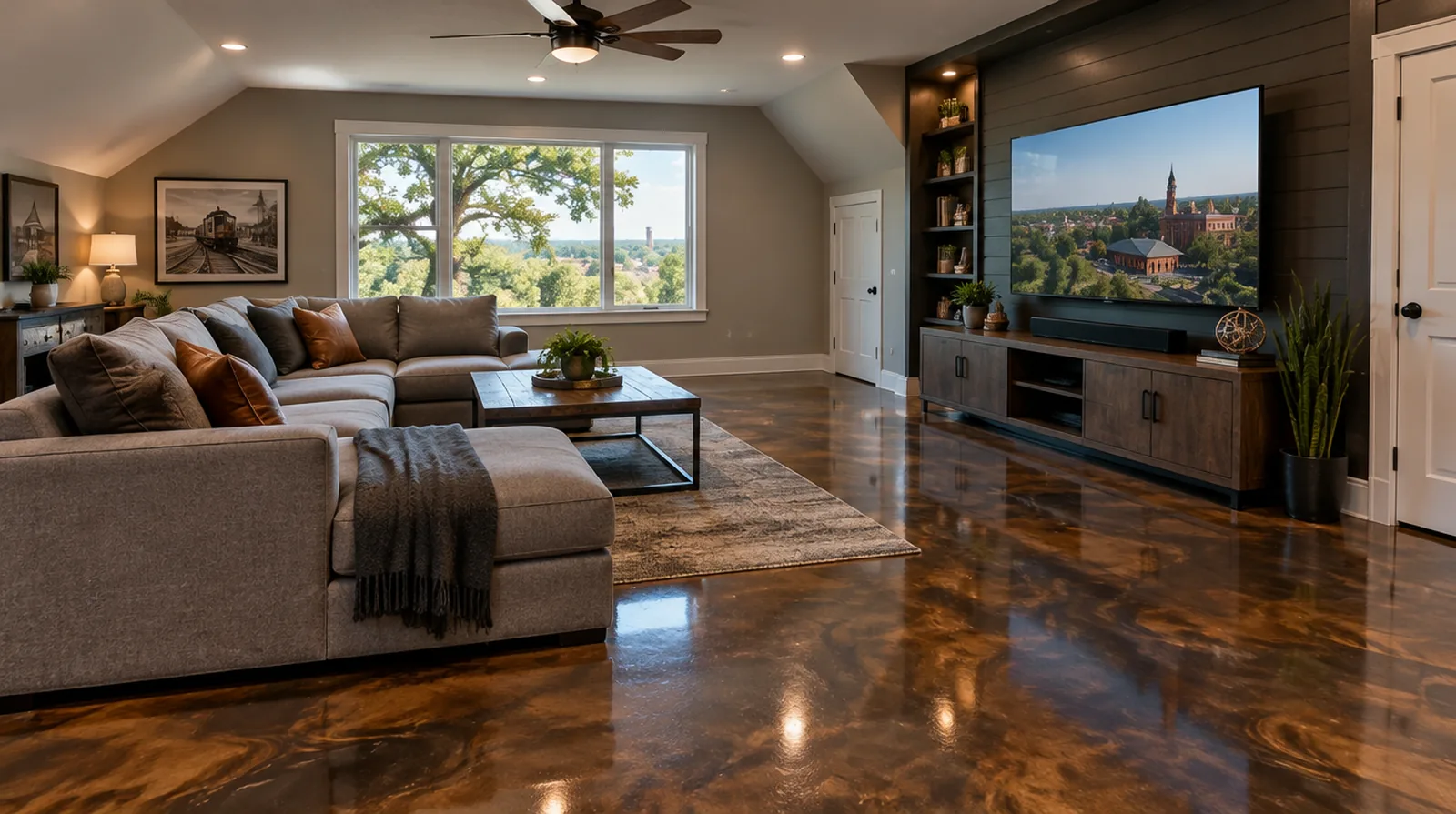
How metallic floors get their look
A metallic floor uses the same strong epoxy as a garage system, but instead of chips we mix fine reflective pigments into a clear or tinted resin. As the resin is poured and worked across the floor, those particles settle and shift, creating ripples, veins and clouds that catch light from different angles. Walk across the room and the floor seems to change. No two floors come out identical, which is part of the appeal.
We control the look with color choice, how we spread and manipulate the resin, and the tools we use during the pour. A slow, even roll gives a soft, cloudy finish. Working the wet resin with brushes, sprayers or solvents creates bolder movement and lava-like cells. Before your floor goes down we show you photos and sample panels so you can pick a direction you love.
Rooms where metallic shines
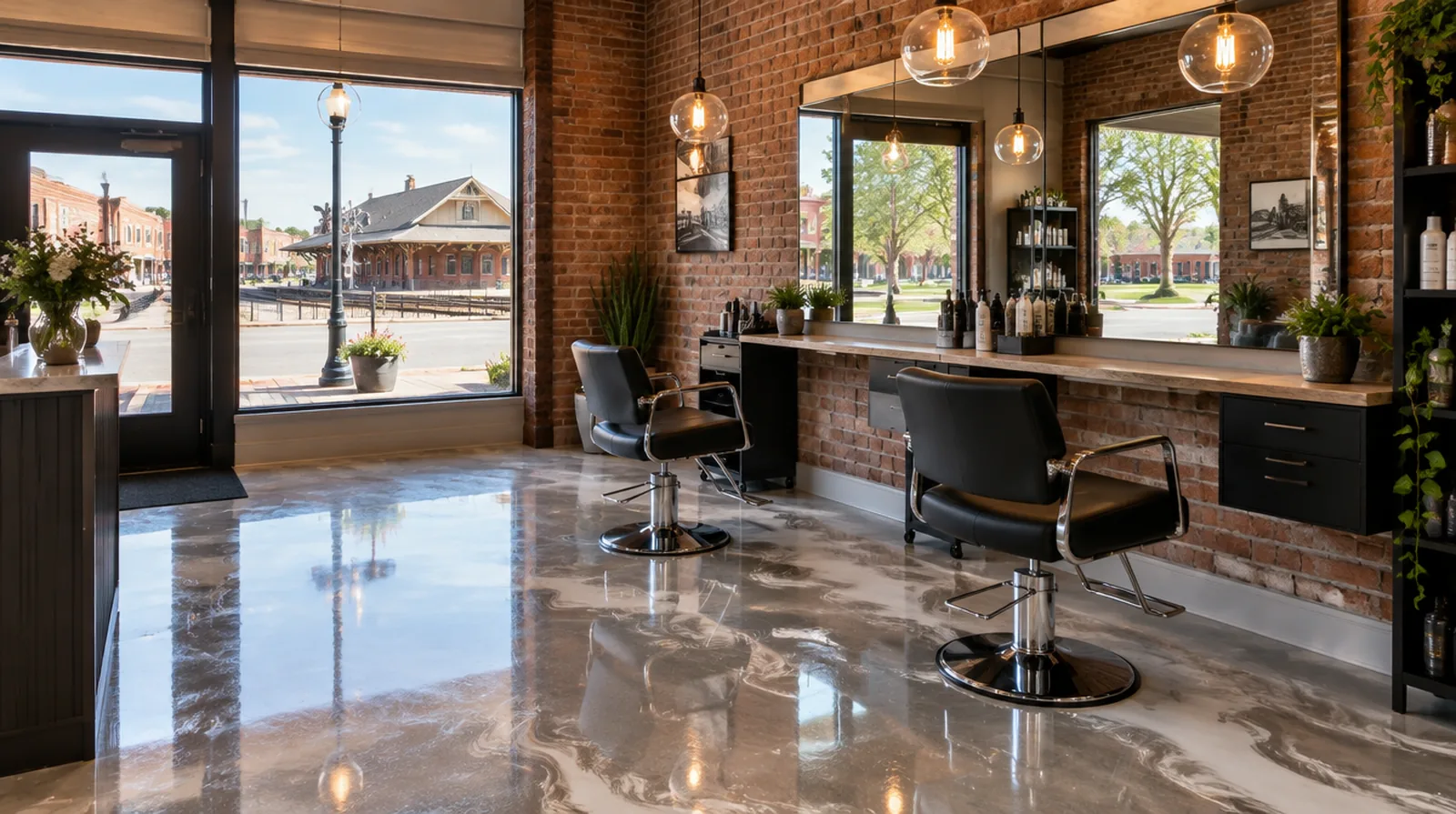
Metallic epoxy is best indoors, where it is protected from heavy tire traffic and direct sun. Around here we see it in finished bonus rooms, basements in the few homes that have them, game rooms, home bars, man caves and she sheds. On the commercial side it works well in salons, boutiques, car showrooms, offices, restaurant dining areas and church fellowship halls. Any place you want a dramatic floor that is still easy to wipe clean is a candidate.
It can work in a garage too, especially a showpiece garage that holds a classic car instead of a work truck. In that case we use a tougher topcoat and talk honestly about how the smooth gloss will show scratches and tire marks more than a flake floor would.
Prep matters even more here
Because a metallic floor is smooth and reflective, every flaw underneath shows. A crack, a patch that is not flush or a low spot will telegraph straight through the finish. We grind the concrete thoroughly, fill cracks and holes, and skim coat rough areas when needed so the surface is flat and uniform. If the room has old tile adhesive, carpet glue or paint, we remove it completely first. Moisture testing is a must on any interior slab before a decorative pour.
Our installation steps
- Diamond grinding and full dust collection
- Crack, joint and hole repair, ground flush
- Primer coat sealed into the slab
- Tinted base coat that sets the background color
- Metallic pour, worked by hand to build the pattern
- Clear topcoat for scratch and stain resistance
A typical room takes two to three days including cure time between coats. We seal off the area, protect walls and trim, and keep dust down throughout.
Picking colors
Popular blends include charcoal and silver, bronze and copper, deep blue with white, and soft pearl tones that read almost like marble. Many people choose a color that ties to their cabinets, countertops or a brand palette. We can also add subtle accents, like a darker border or a lighter band through a hallway. Bring a paint chip or a photo and we will help you choose a combination that fits.
Durability and care
Metallic epoxy is hard and dense, and with a good topcoat it holds up well to foot traffic, spills and furniture. Use felt pads on chair legs, put mats at entry doors to catch grit, and clean with a damp microfiber mop and a pH-neutral cleaner. Avoid harsh chemicals and abrasive pads. Over time, a high-traffic area may need a fresh topcoat, which we can apply without redoing the whole floor. For a high-sheen look without coatings, take a look at polished concrete. To bring the same style to a counter, see our epoxy countertops.
Cost compared with other floors
A metallic floor usually costs more than a basic garage coating because of the extra prep, the decorative pour and the labor of working the pattern by hand. Compared with natural stone, high-end tile or hardwood, it is often in the same range or lower, and it has no grout lines or seams. We give you a written price after seeing the room so there are no surprises.
to talk through a metallic floor.
Call (731) 240-6858 for a free estimate.