What a sealer does
Outdoor concrete here deals with a lot. Summer storms dump inches of rain in an afternoon. Humid shade breeds mildew and green algae on north-facing walks. Pine sap, pollen and leaf tannins stain the surface. A few times a winter, an ice event brings freezing rain and deicer. Unsealed concrete absorbs water and everything in it, which leads to staining, surface scaling and a dingy look within a few seasons.
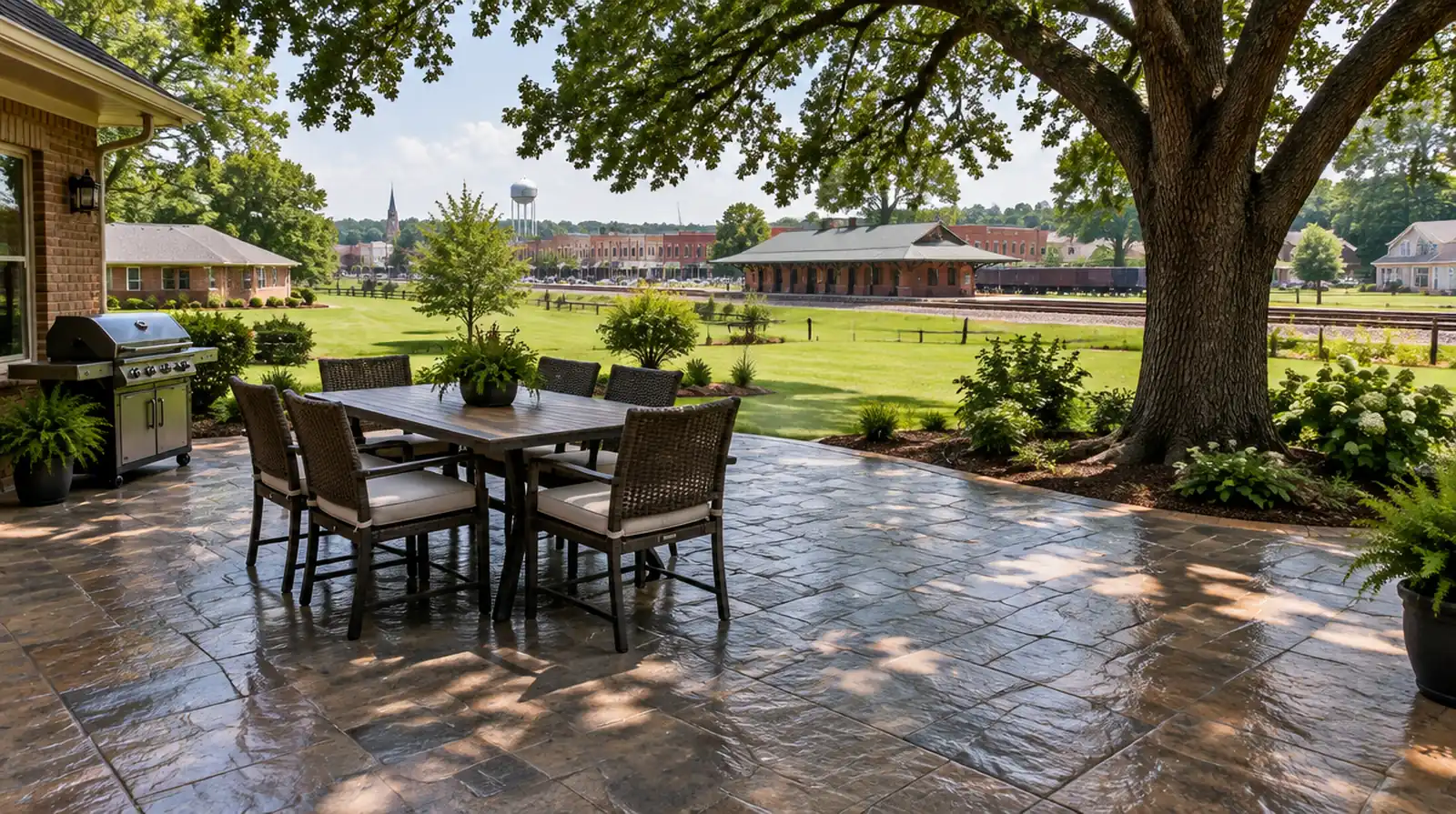
A sealer reduces how much the concrete absorbs. Water beads up instead of soaking in, stains stay near the surface where they can be cleaned, and freeze damage is less likely because less water is in the pores. On stamped or colored concrete, a good sealer also brings back the color and adds a protective layer against UV fading.
Types of sealers we use
- Penetrating sealers: Silane and siloxane products soak into the concrete and repel water without changing its look or making it slick. Good for driveways, walks and pool decks.
- Acrylic sealers: Form a thin film that enhances color and adds sheen. Common on stamped and decorative concrete.
- Polyurethane and polyaspartic sealers: Tougher film-forming sealers for higher-traffic areas or where you want more chemical resistance.
We pick the sealer based on the type of concrete, how it is used, how much shine you want and how much slip resistance you need.
Cleaning and repair first
A sealer locks in whatever is on the surface, so cleaning matters. We pressure wash, treat mildew and algae, remove oil and rust stains as much as possible, and strip old peeling sealer when needed. Cracks are cleaned and filled, and damaged joints are repaired. On stamped concrete, we pay close attention to old sealer that has turned white or cloudy, a common issue when moisture gets trapped, and we correct it before applying fresh product.
Areas we seal
Patios, porches, front walks, steps, pool decks, driveways, garage aprons, stamped and colored concrete, exposed aggregate, and outdoor kitchen slabs. We also seal interior concrete floors in basements and utility rooms when a full coating is not needed.
Slip resistance near pools
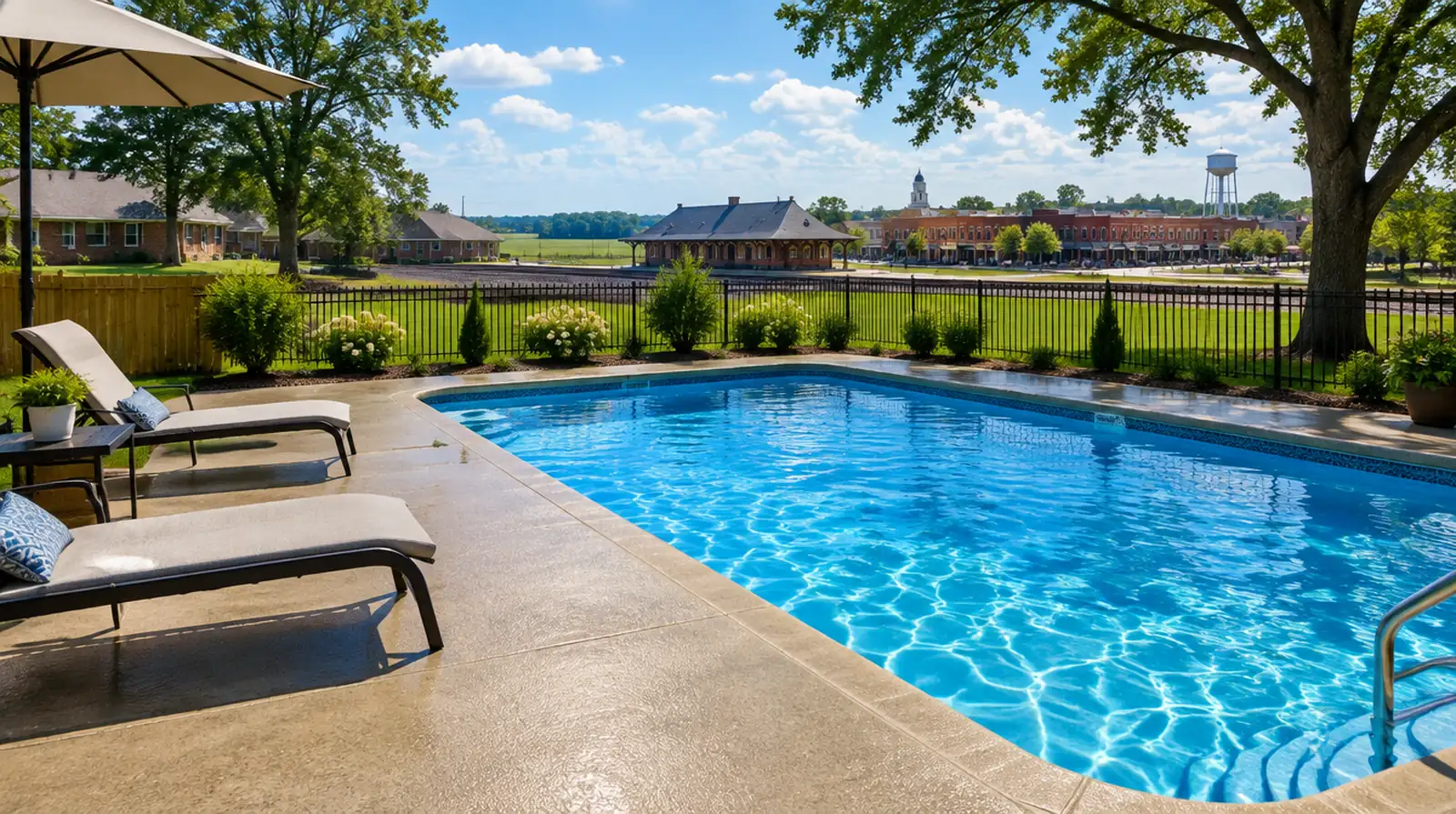
Wet concrete around a pool needs to stay safe underfoot. Film-forming sealers can get slick, so on pool decks we often use a penetrating sealer that leaves the texture alone, or we add a fine anti-slip grit to a film sealer. We will talk with you about how the deck is used, especially if kids or older family members are around, and choose a finish that balances looks and safety.
How often to reseal
Penetrating sealers typically last several years. Acrylic sealers on stamped concrete usually need recoating every two to three years in full sun. Signs it is time: water stops beading, color looks faded, or the surface starts to show wear in traffic paths. We can put you on a reminder schedule so you do not have to keep track.
When sealing is not enough
If the concrete is heavily scaled, badly stained or cracked throughout, sealing alone will not make it look new. In those cases a resurfacing and coating or a decorative flake system on a covered porch may be a better answer. We will lay out the options honestly during the visit.
Stamped concrete that has gone cloudy
Many backyards here have stamped patios that were sealed once at install and then forgotten. Years later the color looks washed out and parts of the sealer have turned milky white from trapped moisture. We can often fix that by stripping or reactivating the old sealer, letting the slab dry, and applying a fresh coat that breathes. The color comes back, the pattern stands out again, and the patio looks close to new without being replaced. It is one of the most satisfying projects we do.
to get a sealing quote.
Call (731) 240-6858 for a free estimate.